












What the network includes
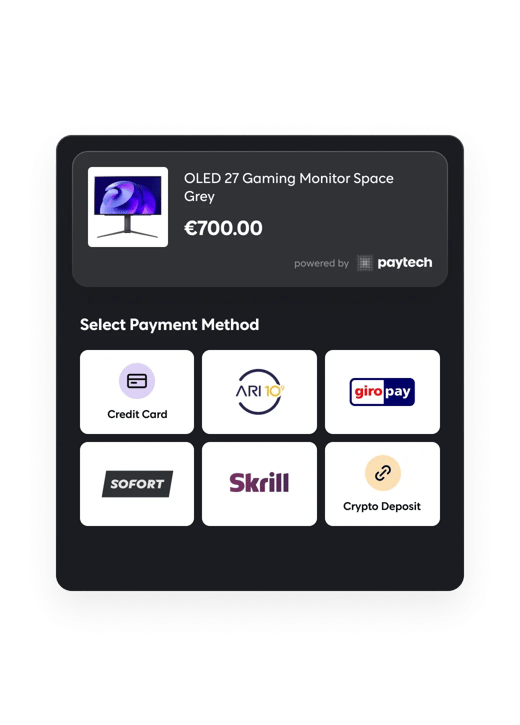
The integrations cover cards, Apple Pay and Google Pay, alternative payment methods, e-wallets, open banking, bank transfers and crypto processing. They also include KYC, anti-fraud and banking services.
Partners connect to these providers through paytech instead of building a separate integration with each one. They just choose a provider, add their credentials and configure it in paytech.
How the network grew
Most new integrations start with a partner request. A partner needs a provider for a new market and sends us the methods, operations, currencies and countries they need. From there, our integrations team takes it on.
The team analyses the provider’s API and agrees the scope with the partner. Once the scope is approved, they build the integration, document the terminal settings, and put it through code review and testing before it goes live. It’s then added to the catalogue, where every partner can find it.
Each provider reports payment results in its own way, so the team converts them into one standard format. Partners see the same statuses and error codes no matter which provider they use.
The work doesn’t stop at launch. Providers change their APIs and requirements over time, and our team updates each integration when they do, so partners don’t have to change anything on their side.
Let’s grow together
This milestone belongs to our partners as much as to us, and we’re grateful to every partner who sent us requests, tested new integrations with us and helped shape what the network looks like today.
The full list of integrations is available in the Integrations Hub: https://www.pay.tech/integrations-hub
paytech — powering payments